

A low purchase price can be tempting when you are looking for affordable LED grow lights. But a small seedling shelf and a tent full of mature plants are different purchases. Spend too little on the wrong format and you may end up buying a second light before the first growing cycle is finished.
Tube lights spread across shelves, while a hanging panel suits a dedicated growing area. The useful comparison is the cost of lighting your actual plants, including mounting and electricity, rather than whichever product has the lowest price beside its name.
This guide helps South African buyers choose a sensible starting budget, compare three lighting options and calculate running costs before deciding whether a larger fixture is worth buying.
1. Set a Budget Around the Space You Will Actually Use
Start with the planted area, not the size of the room. A shelf of herb pots needs light over that shelf; buying a fixture intended for a larger enclosed growing area can add expense without solving the layout. Affordable LED grow lights make sense when their shape, mounting arrangement and output suit the plants you intend to keep.
Draw the footprint of the pots at their expected mature size. Leave room to water and move them. For a tent, account for the distance occupied by pots, the plants themselves, hanging hardware and the light. That exercise can change the purchase more than a small discount: a panel that cannot be hung sensibly is poor value even if it costs less.
Separate the available money into practical spending categories before comparing products:
- Lighting: the fixture, the correct power connection and any mounting equipment needed for your shelf or frame.
- The growing setup: pots, growing medium and, where relevant, a tent and ventilation. A lamp price does not include the whole system.
- Operation: a recurring electricity allowance based on the hours you expect to run the light.
Keep your first purchase of affordable LED grow lights focused. If you have one small shelf now, do not buy for an imagined room of plants next year unless that expansion is already planned. Equally, a temporary low-output purchase can become expensive if it cannot serve the crop you are about to grow. Compare affordable LED grow lights against a written use case: the footprint, plant type and mounting location.
2. Compare Complete Lights, Not Accessory Prices
The T8 two-tube set is a practical starting option for compact shelves, seedlings and herbs. Each tube uses 10W, giving the pair a combined 20W. Choose the lamps-and-power-cord package when starting from scratch; a replacement power cord alone will not light your plants. The complete two-tube set costs R520.
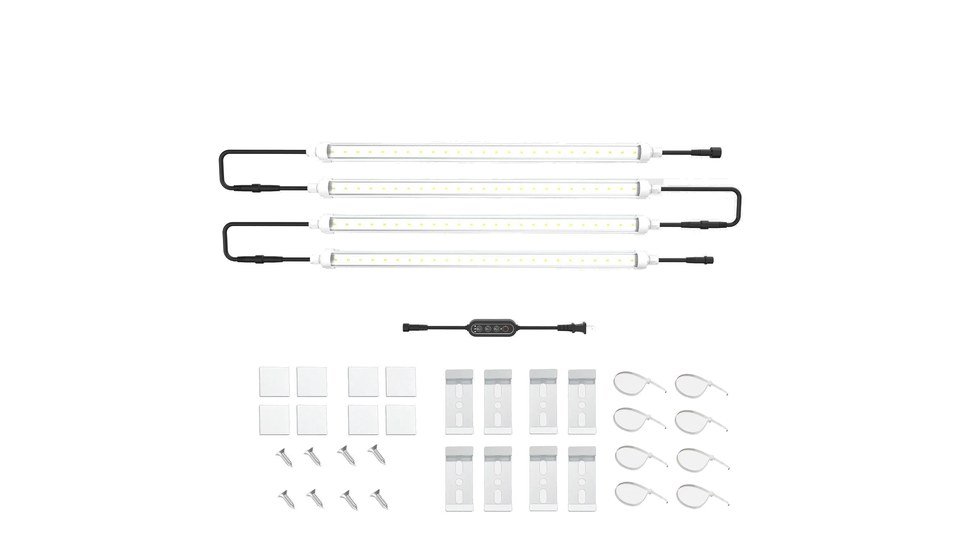
The four-tube set costs R845 and provides four 10W tubes. The additional R325 buys two more tubes, allowing a different arrangement across shelves. It does not establish that every plant will receive sufficient light: spacing, height and crop requirements still matter. Among affordable LED grow lights, this distinction between more fixtures and more suitable illumination is worth keeping clear.
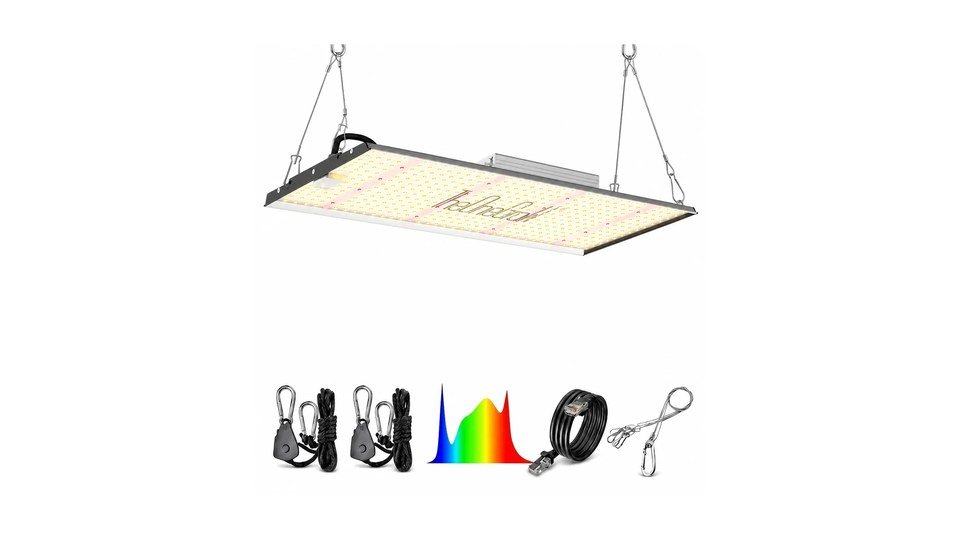
The MA2000 200W LED Grow Light suits a dedicated growing area where a hanging panel is more useful than tubes. Its dimming lets you adjust output, and the listed core footprint is 90 × 90cm. It costs R1,900.
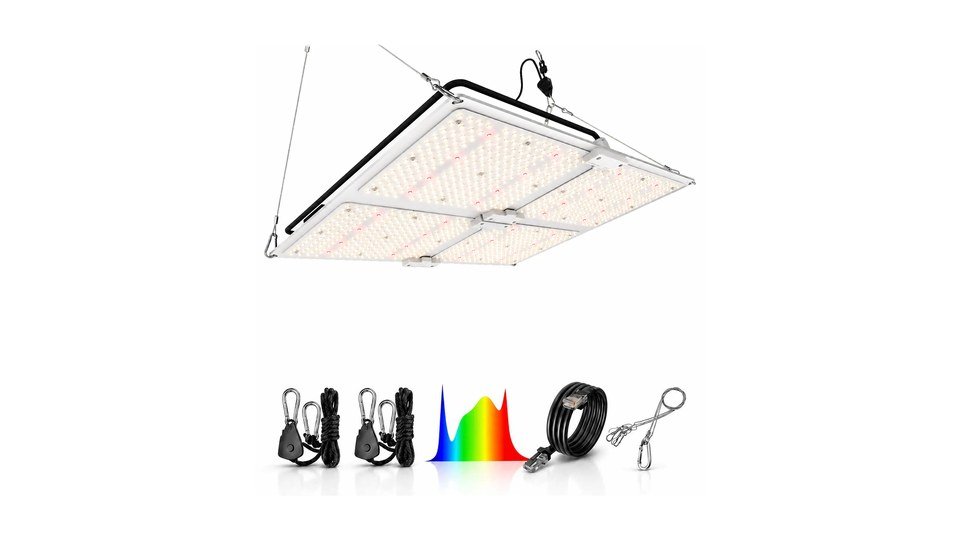
For a larger lighting requirement, the MA4000 400W LED Grow Light costs R3,780, an extra R1,880 over MA2000. Buy that increase because the intended setup needs it, rather than treating the larger model number as a promise of better value.
When comparing affordable LED grow lights, match package contents first. Then compare the installation, the useful growing area and the electrical demand. The lowest visible starting price on a variable product is not necessarily the price of a complete working light.
3. Add Electricity to the Purchase Price
Affordable LED grow lights should remain affordable to operate. Calculate electricity from watts, operating hours and your own tariff: watts divided by 1,000, multiplied by daily hours and days, gives kilowatt-hours. Multiply that result by the price per kilowatt-hour on your electricity account.
The examples below assume full rated power for 12 hours a day over 30 days. R3 per kWh is an illustrative tariff, not a South African national rate. These are lamp-only estimates: fans and other equipment add their own consumption, and the operating schedule must suit the plants rather than this example.
| Light | Power | Monthly electricity | Cost at R3/kWh |
|---|---|---|---|
| T8 two-tube set | 20W | 7.2kWh | R21.60 |
| MA2000 LED Grow Light | 200W | 72kWh | R216 |
| MA4000 LED Grow Light | 400W | 144kWh | R432 |
Moving from MA2000 to MA4000 therefore adds 72kWh, or R216 under these assumptions, each month. Across six identical months, that is R1,296 in additional electricity as well as the R1,880 purchase difference. This is a budget comparison, not a claim that the smaller light can perform the larger light’s job.
Dimming can reduce consumption, but do not assume that the dial position exactly matches wall power. Measure the chosen setting with a suitable plug-in electricity meter if precision matters. Comparing affordable LED grow lights with both purchase and running costs makes the upgrade decision clearer: spend more where the extra output has a purpose, and keep the calculation tied to your actual schedule.
4. Decide Whether to Start Small or Buy the Upgrade
Choose the T8 format when your immediate task is lighting a compact shelf and you can mount the tubes above it. Choose MA2000 when you have a dedicated space and need a hanging panel. Consider MA4000 when the larger setup justifies both the extra purchase cost and its electrical demand. Affordable LED grow lights are a fit between the equipment and the job, rather than one universal wattage.
Before paying for an upgrade, identify what your existing arrangement cannot do. A dark corner caused by poor positioning may need a different layout; a genuinely larger growing area may need a different fixture. More power will not fix every installation problem. Use the South African LED grow light guide to compare the broader lighting choices.
These two checks help separate a useful upgrade from an unnecessary purchase:
- Buy for a confirmed change: a larger planted area, a different crop requirement or a mounting arrangement that the existing fixture cannot serve.
- Keep usable equipment: a small shelf light can continue serving seedlings after you add a main growing light, provided that remains a real part of your setup.
Do not choose a larger panel solely because it can be dimmed. If you will use only a small part of its capacity indefinitely, the upfront saving from a more suitable option may matter more. Conversely, buying twice can waste money when an expansion is already certain. Your shortlist of affordable LED grow lights should reflect what will change, when it will change and the total amount you are prepared to spend.
Conclusion
For a compact shelf, start by considering the R520 T8 two-tube set. For a dedicated growing area, compare the R1,900 MA2000 200W LED Grow Light with the R3,780 MA4000 400W model against the crop and space you actually intend to light. Affordable LED grow lights should solve that specific job within a workable total budget.
Include electricity and the rest of the setup before choosing the upgrade. A larger fixture earns its place when its extra capacity serves a clear need. Compare the lighting options for your planned space at SilvaBask.
FAQs
How much electricity do LED grow lights use?
Multiply actual watts by operating hours, then divide by 1,000 for kWh. A 200W light running 12 hours daily uses 72kWh over 30 days. Multiply that figure by your own applicable tariff to estimate cost.
How do I choose grow-light wattage on a budget?
Start with the crop and planted area, then compare verified coverage and actual power. The MA2000 is a 200W panel with a listed 90 × 90cm core footprint; wattage alone does not guarantee crop performance.
Do I need an expensive panel for a small herb shelf?
Not automatically. Compare a shelf-friendly tube set with a panel against your plants and mounting space. SilvaBask’s complete T8 two-tube set costs R520; it is a compact-shelf option, not a substitute for every larger growing setup.
What is the cheapest complete light considered here?
The T8 two-lamp set with a power cord costs R520. The R80 option is a cord alone, not a working light. Check package contents and the shelf layout before comparing this option with a larger panel.
How do I compare affordable LED grow lights fairly?
Compare complete packages for the same growing task, including mounting and electricity. Keep the crop, planted area and operating schedule consistent. A tube set and a hanging panel serve different layouts, even when both fit the budget.