

The best hydroponic system for beginners depends on where you will grow and how much equipment you want to assemble. A kitchen counter, a bright floor space and a small lettuce experiment each call for a different starting point. Planting capacity alone will not tell you which one is easier to manage.
This shortlist compares a countertop garden, a recirculating tower and DIY Kratky lettuce. The tower is currently out of stock and included for comparison only. The DIY option is a method, not a shop-bought kit.
This guide helps you choose between those formats, understand what the purchase includes and plan the lighting and routine care that will make your first setup manageable.
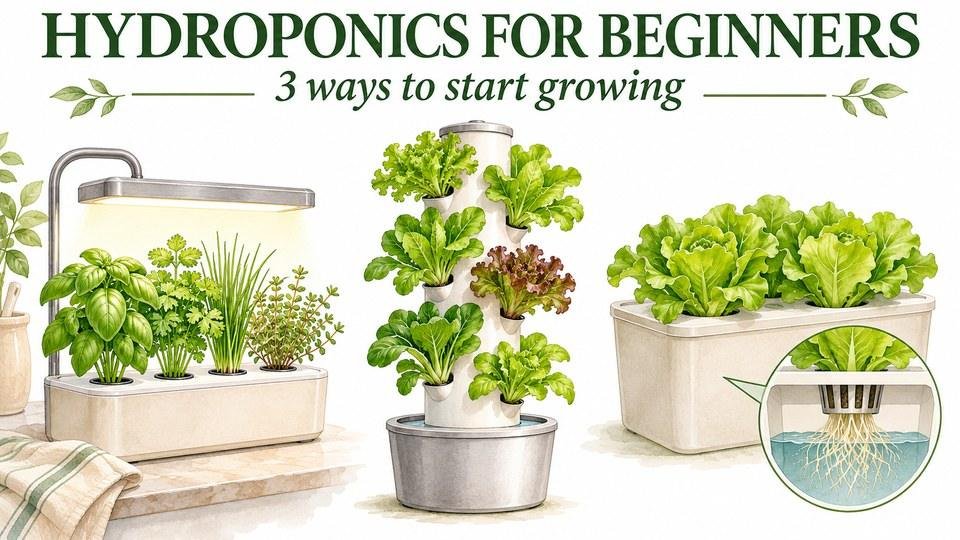
1. Countertop Garden for a Small Indoor Start
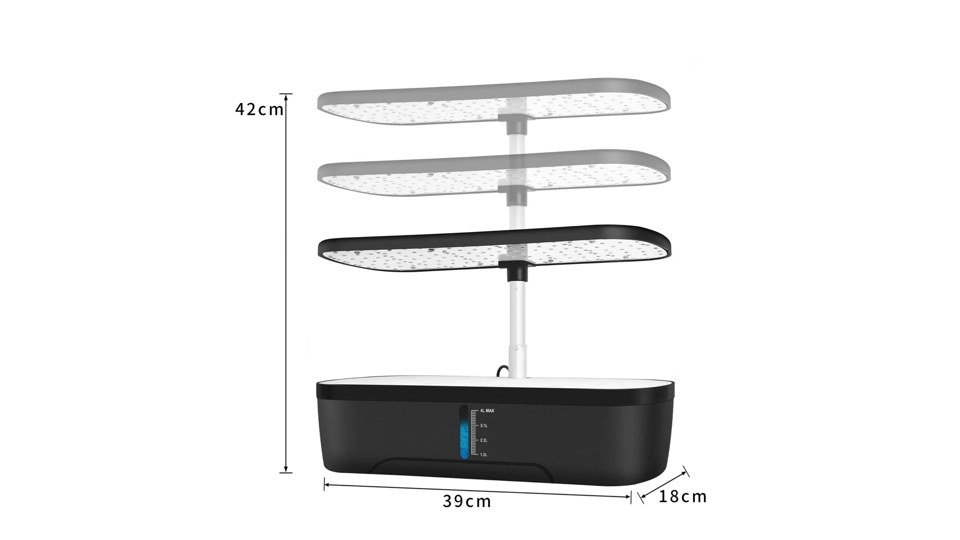
The Smart Countertop Hydroponic Garden is the most straightforward option here when you want a compact indoor layout with lighting already integrated. Its 39 × 18cm base fits a small growing area, while the adjustable overhead light sits within a maximum illustrated overall height of 42cm. Compact herbs and leafy greens are more suitable starting choices than tall or spreading crops.
It has 12 planting positions and a 24W LED light. Twelve positions do not mean that twelve mature plants of every variety will fit comfortably. Leave extra space where neighbouring leaves would overlap. For a buyer seeking the best hydroponic system for beginners on a kitchen counter, a smaller, accessible crop can be more useful than filling every opening.
The garden costs R1,240. Its package image shows 12 baskets, 12 grow domes, 12 sponges, A and B nutrients, an adaptor and a manual. Seeds are not listed.
Before choosing this as your best hydroponic system for beginners, check two practical limits:
- Growing height: the overall height includes the unit, so it is not all available to the plant above the tray.
- Care: the water-level window helps with checks, but automatic pH correction and nutrient dosing are not specified for this garden.
This can be the best hydroponic system for beginners when keeping plants within reach matters more than expanding to a large planting layout. The integrated light makes the initial equipment decision simpler; water and nutrient management remain your responsibility.
2. Vertical Tower for More Planting Positions
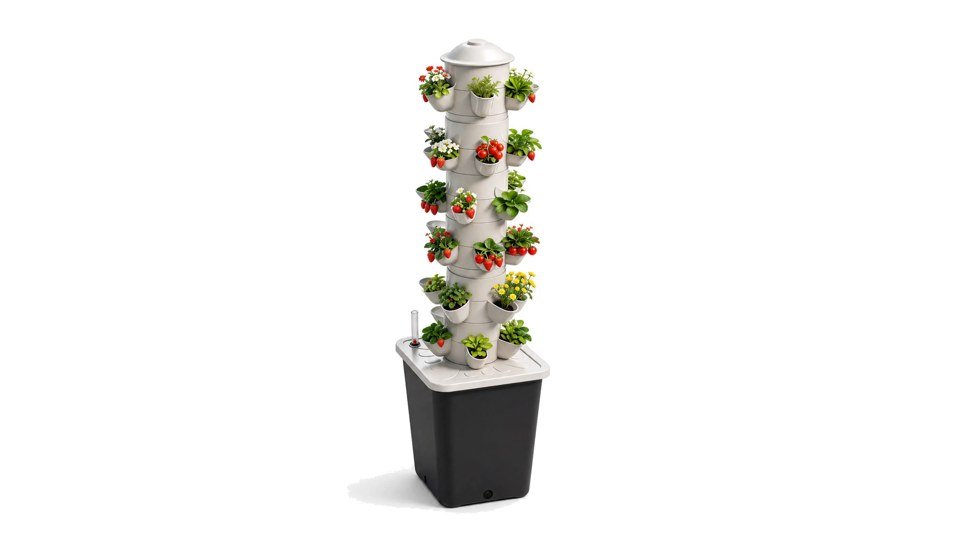
The 30-Site Vertical Hydroponic Tower suits a buyer who has floor space and wants several planting levels. Its base measures 25 × 25cm and its illustrated height is 86cm. Allow additional room for mature leaves, access and cleaning: the base dimensions describe the equipment, not the entire space your plants will occupy.
Water is pumped from the reservoir to the upper section and returns through the planting levels. The component image identifies the tower sections, reservoir, pump, power adaptor, planting sponges, level gauge and filling funnel. For someone considering the best hydroponic system for beginners with more planting positions, this brings circulation into a single assembly rather than several separate containers.
The currently unavailable tower is listed at R2,460, or R1,220 more than the countertop garden. That difference buys a vertical recirculating format with 30 sites; it does not include built-in lighting.
Two checks determine whether it is the best hydroponic system for beginners in your space:
- Light: plan suitable natural light or separate indoor lighting that reaches the lower levels as well as the top.
- Circulation: check the pump, water level and return paths daily; keep the system accessible for those checks.
Start with fewer plants if that makes spacing and observation easier. Thirty sites are available positions, not a promise of thirty full-sized crops growing equally well. If restocked, consider the tower for its layout and routine, rather than its site count alone.
3. DIY Kratky Lettuce Setup for Learning the Basics
A small Kratky lettuce setup is a useful third option if you would rather assemble a simple experiment than buy a ready-made unit. It needs a suitable reservoir, a lid and plant support, a seedling, nutrient solution and adequate light. There is no complete kit price here: the cost depends on the actual container, supports and supplies you choose.
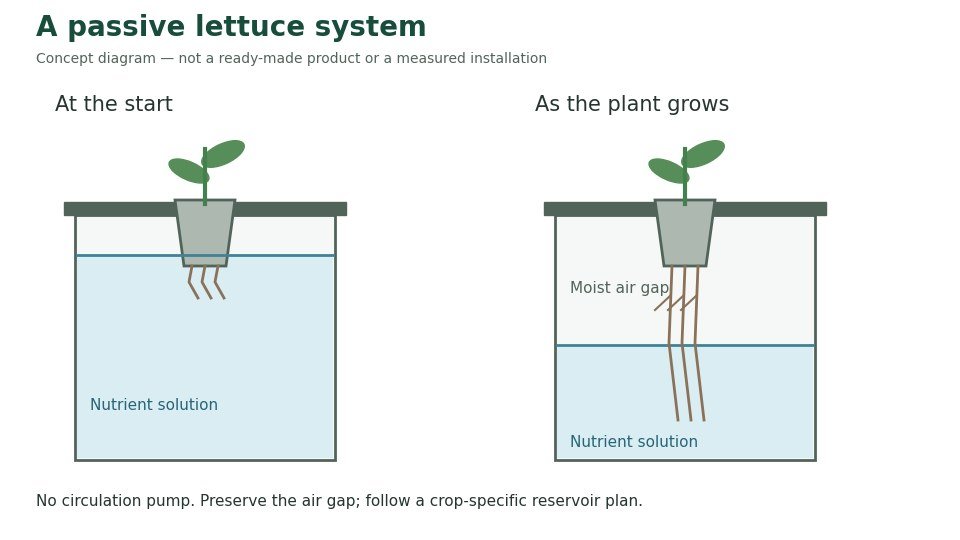
In the University of Hawai‘i non-circulating lettuce method, roots grow down as the solution level falls, leaving a moist air space above it. The method does not need a circulation pump. Once air roots have developed, raising the solution enough to submerge them can disrupt the intended arrangement. Follow the method’s reservoir and refill guidance rather than treating it like a continuously full water jar.
This may be the best hydroponic system for beginners who enjoy building and observing a small setup. It is less suitable if your priority is opening a box, following one product manual and having the light already attached. Without an integrated lamp, the growing location still has to provide adequate light.
Keep the first experiment narrow: one crop and a container you can inspect and clean. Use the project to understand the relationship between the plant and its solution before scaling up. Calling it the best hydroponic system for beginners would make little sense if you dislike measuring, assembling or following a method. Its appeal is fewer moving parts and a clearly defined learning project, not freedom from all maintenance.
4. Compare the Whole Setup Before Buying
The best hydroponic system for beginners is the one whose daily routine you can sustain. Compare the cost of a usable setup, not just the vessel or planting positions. The countertop garden includes an overhead light; the tower requires a separate lighting decision; the DIY method requires you to assemble and price its components.
| Option | Starting price | Lighting | Main buying reason |
|---|---|---|---|
| Countertop garden | R1,240 | 24W LED included | Compact indoor start |
| 30-site tower — out of stock | R2,460 | Not integrated | Vertical planting layout |
| DIY Kratky lettuce | Price chosen components | Plan separately | Small learning project |
Indoor tower lighting needs particular thought. A lamp aimed only at the upper canopy may leave lower plants poorly served. Use the South African grow light guide to understand lighting choices, then assess how the arrangement reaches your actual planting levels rather than transferring a flat growing-area recommendation directly to a tower.
Reserve money for seeds or seedlings, replacement growing supplies and appropriate water-quality checks. An integrated light or pump is not an automatic nutrient-management system. Choose equipment whose instructions you can follow and whose parts you can reach without dismantling your growing area every time.
Before deciding on the best hydroponic system for beginners, rehearse an ordinary maintenance visit: can you see the water level, inspect the plants, reach the reservoir and clean the components? If two options fit your budget, choose the one that makes those tasks easier in the space you actually have.
Conclusion
Choose the R1,240 countertop garden for a compact indoor start with a light included. Consider the R2,460 tower only after restocking, with suitable lighting and circulation checks. Try a small Kratky lettuce setup if building the system is part of what you want to learn. The best hydroponic system for beginners should match both the location and the grower’s routine.
Begin with manageable crops and enough space to inspect them, even if some planting positions remain empty. Compare the ready-made hydroponic options and related equipment at SilvaBask.
FAQs
What is the best hydroponic system for beginners with little indoor space?
A compact countertop garden with an integrated light is a practical choice when space is limited. Compare its full height and mature plant spread with your available area. A tower needs access around its sides and a separate lighting plan.
What are the easiest plants to start growing hydroponically?
Compact herbs and leafy greens are useful starting choices. Lettuce suits a small Kratky experiment, while compact herbs fit a countertop garden. Choose varieties that stay within the available light and space rather than starting with tall, spreading crops.
Is the Kratky method really easy for a beginner?
It can be a simple learning project because it uses no circulation pump. You still need suitable nutrients, adequate light and a correctly sized reservoir. Follow the lettuce method’s guidance and preserve the air gap rather than repeatedly filling the container to the top.
Does the tower include a grow light?
No integrated grow light is included in this tower design. Choose a location with suitable natural light or plan indoor lighting separately. Make sure the arrangement serves the lower planting levels as well as the upper plants.
Can I fill every planting position immediately?
You do not have to. The number of sites describes available openings, not a guarantee that every mature plant will have enough space. Starting with fewer compact plants makes it easier to observe growth, reach the reservoir and adjust spacing.